
Light at the End of the Tunnel: A Q&A with Saint John’s Hospice Case Manager David White
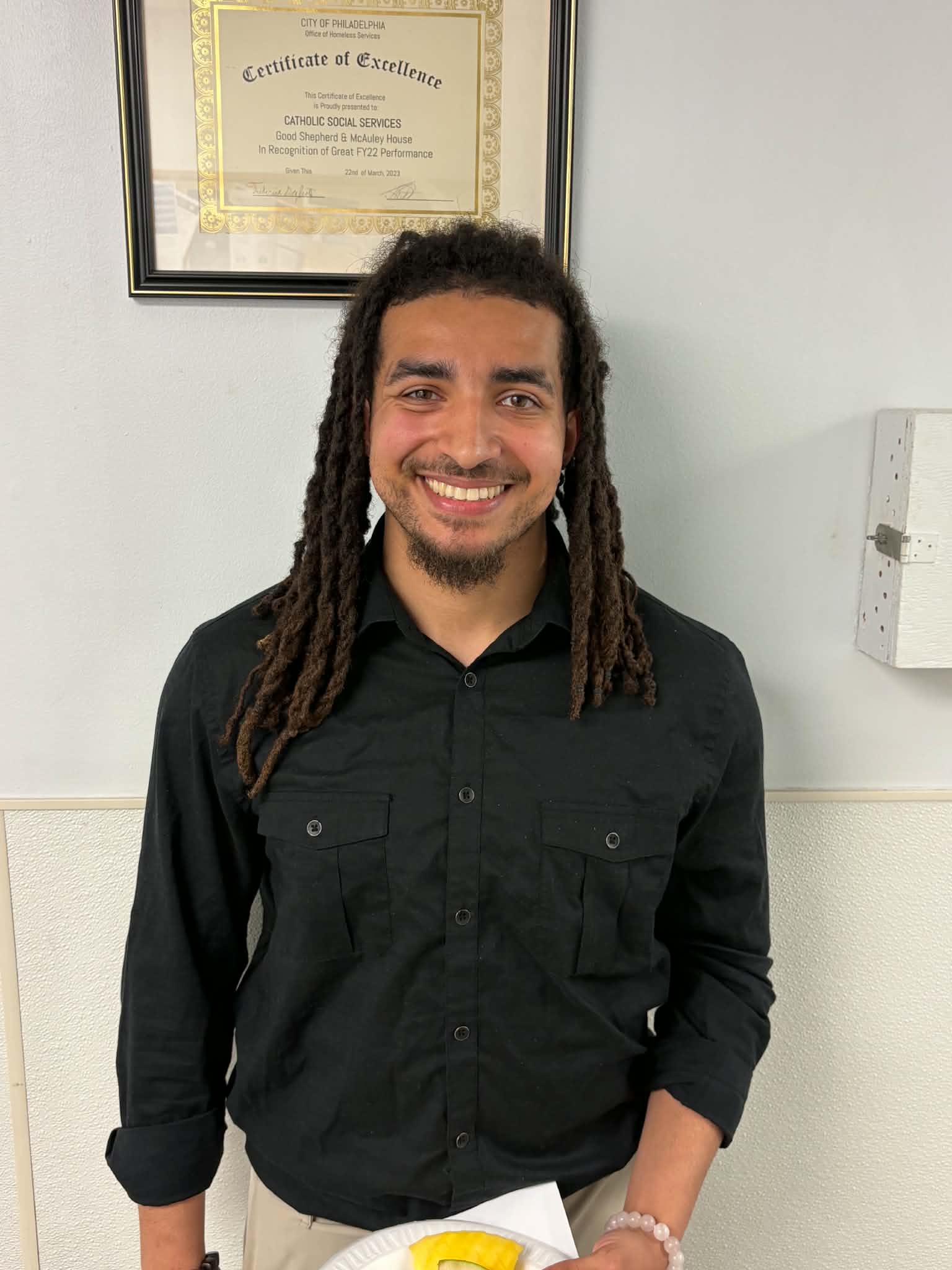
Case managers play an integral role in the path toward stability for residents of Saint John’s Hospice (SJH), serving as their mentors and companions. We sat down with David White, lead case manager, to learn more about his work and what drives him every day to help men experiencing homelessness and poverty.
What does case management mean, and what does your day-to-day look like?
We support these men on their journey toward stable housing and independence. We help them, we guide them by pointing them in the right direction, assisting with getting various documentation, and just helping them get to where they need to go. At the end of the day, it is up to them whether or not they are actually taking part in their service plan. Our job is to facilitate their growth and to help them along the way.
What kind of documentation do you help the residents with?
Vital documentation is a major thing amongst individuals experiencing homelessness – their IDs, Social Security cards, birth certificates, insurance, even SNAP benefits. A lot of people lose that vital information, which creates an extreme barrier to getting housing and employment. So, it is crucial that we get those sorts of documents to them as soon as possible, and through our case management program, it is pretty easy to do that.
What is your favorite aspect of your job?
Honestly, the [residents]. The guys are fantastic. I love meeting with them, talking with them, conversing, even just talking about nothing, even if it is not about their case. If we are talking about sports or other things, I love that. And just being able to see them develop throughout the program, from day one to graduation, is an amazing thing to witness. Being able to see smiling faces every day and say good morning is an incredible thing.
Everyone goes through peaks and valleys. How do you encourage the men to keep moving forward on harder days?
The path toward self-sufficiency is not a straight line. I like to call it a sine wave. It goes up and down. Everyone’s progress is different, and everyone’s path is different. For them to be able to acknowledge that, to recognize that “Hey, I might slip every now and then,” and still get back up and get back focused on what they need – that’s the most important thing. They might go AWOL, they might relapse, but that is not the end of their case. That is not the end of their lives. Everyone makes mistakes.
We try to motivate them by saying there is light at the end of this tunnel. You might not be able to see it. The tunnel might have a curve to it, but it is definitely there.
Is there anything else you’d like people to know about Saint John’s Hospice?
Saint John’s is a fantastic place. I have loved it since day one. My first day here, my former supervisor, Steve Walenta, took me on a visit to see someone who had been with the program for six years, and just being able to see that, on day one, gave me the motivation to continue to develop and become the best case manager that I can be.
It is fantastic what we do here, and I love it.
——–
Saint John’s Hospice, a ministry of Catholic Charities of Philadelphia, is a nationally recognized leader in providing essential residential and day services, acting as a beacon of hope for those experiencing homelessness. For more information about volunteering or to make a donation, visit www.saintjohnshospice.org.